A mistake takes your attention
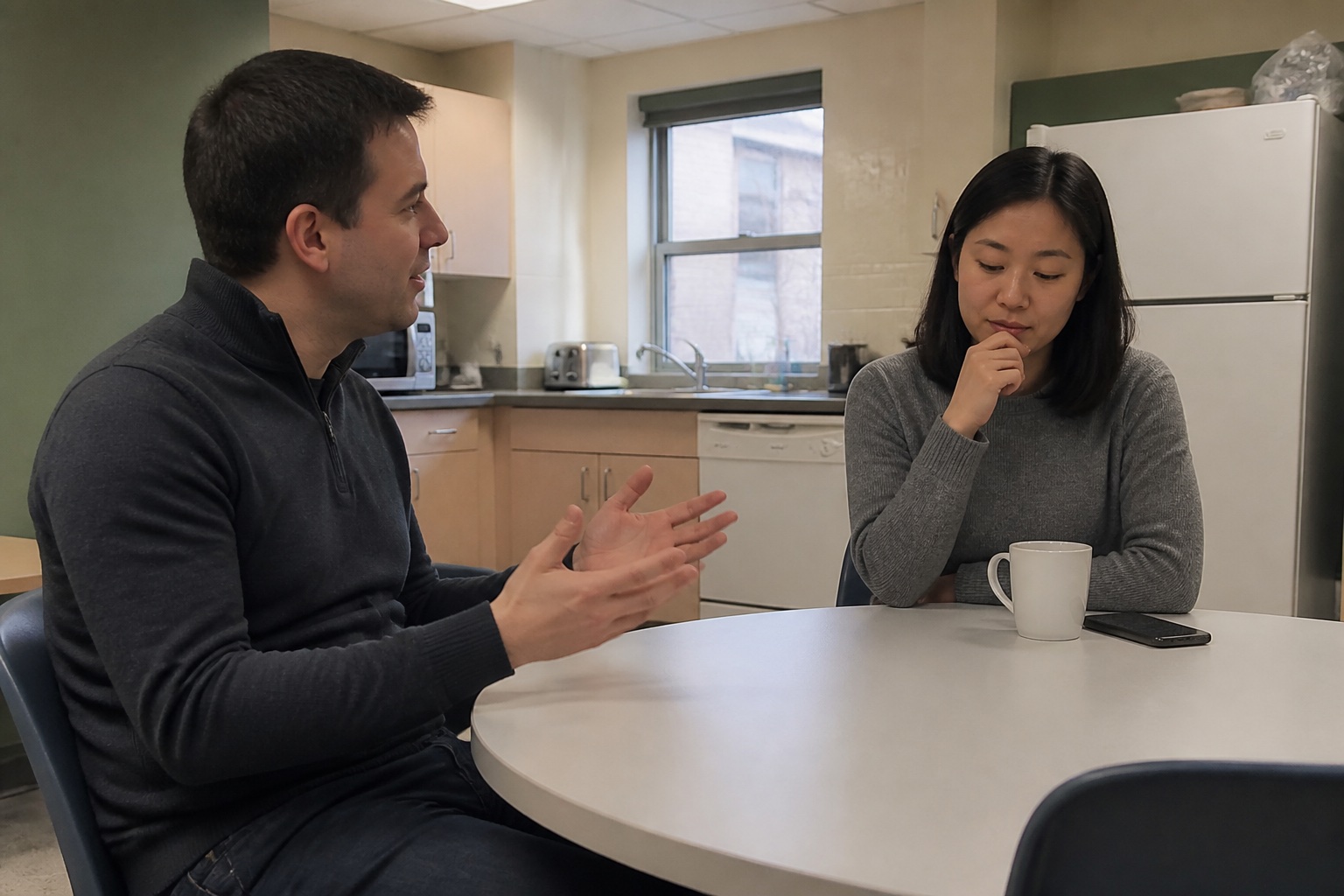
Imagine you are explaining something to a colleague and notice that you used the wrong tense. While they respond to your point, you are still thinking about your sentence: “Why did I say that? I know this.” You hear their words, but you are no longer giving them your full attention.
The mistake itself may have been small enough for the conversation to continue. What changes the exchange is how much attention you give it. You begin watching yourself speak while also trying to listen and decide what to say next.
How the attention spiral builds
With less attention on what the other person is saying, you can miss a detail or lose the point you were making. Your next answer becomes harder to put together, and another mistake or hesitation can give you more to worry about. You check yourself even more closely.
The pattern repeats: notice a mistake, focus on yourself, lose more of the conversation, struggle with the next answer, then focus even harder on yourself. Eventually, almost all your attention can be on your performance. You are asking “How am I doing?” while the conversation carries on.
By then, you may feel you have nothing to say. You have stopped taking in the details, questions, and ideas that would give you something to respond to. In this kind of blank moment, attention has moved so far away from the conversation that you have lost your next thought. A missing word or an unfamiliar topic can also make you go blank; the attention spiral is the pattern we are looking at here.
Bring your attention back to the conversation
When you notice yourself replaying a mistake, try returning to what the other person means. What are they asking? Which part needs an answer? What would you like to understand better? Give yourself a concrete reason to listen again.
If you have lost the thread, ask them to repeat the last point. If your meaning was unclear, make a short correction and continue. You do not have to leave every mistake untouched; the aim is to return to the exchange after dealing with it.
- Practise a conversation with a partner and focus on understanding their point.
- When a mistake catches your attention, notice whether you are still listening.
- Return to one detail they mentioned, or ask a question about it.
- Respond to that detail before reviewing how well you spoke.
Leave time for feedback afterwards
After practice, look at the language with your teacher. You can correct a recurring error and rehearse a phrase without trying to do that work in the middle of every answer.
Review your attention too. Where did you start watching yourself? What helped you return to the other person? A useful practice goal is noticing that shift and rejoining the conversation, even when your English is imperfect.