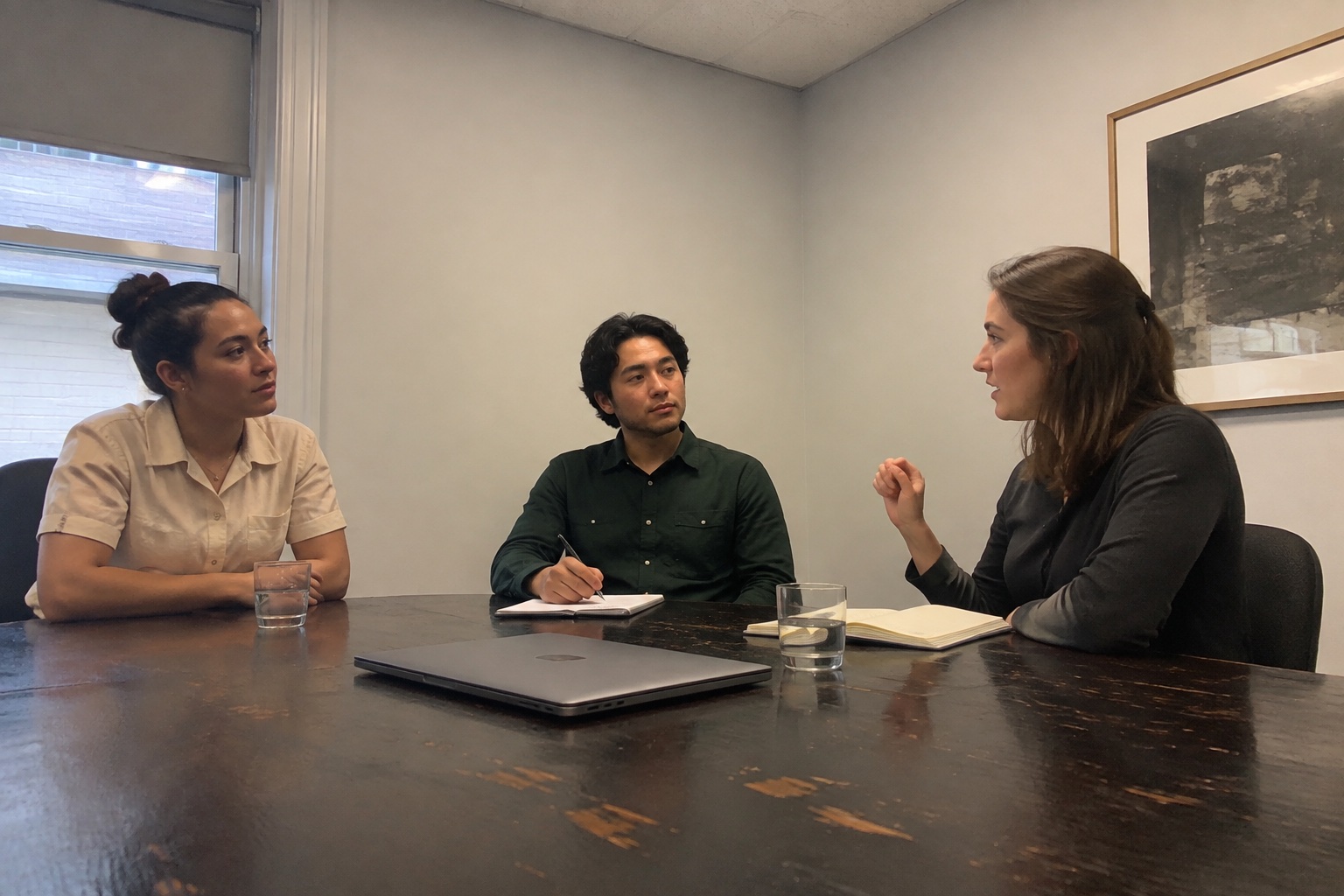
Begin with a question you want answered
Look for something you genuinely want to understand: a missing detail, the reason behind a decision, or what happens next. Ask the question, then give the other person room to answer. Your first contribution can be mostly listening.
This gives you something concrete to respond to. You can focus on what the other person means instead of trying to monitor every word you say.
Let a good exchange make the next one easier
If your question is received well, notice that. Someone answered you, the meeting continued, and you took part. That experience can make another short exchange feel less unfamiliar.
You might ask one follow-up question or respond to a detail in the answer. There is no need to turn the moment into a long speech. The aim is to spend a little more time in the conversation.
Rephrase a point, then add one thought
When you are ready to contribute more, begin with what you heard: “So the main delay is the final review.” Then add a small thought of your own: “Could we ask someone to check it today?”
Rephrasing gives you a clear place to start and lets the other person correct you if you misunderstood. Your added thought can still be brief: a question, a concern, a useful detail, or a possible next step.
Build comfort a little at a time
As these exchanges become more comfortable, try a slightly larger contribution. Explain one reason, offer an example, or connect two points from the discussion. You are gradually taking up more space, rather than demanding a confident performance from yourself at the start.
After the meeting, remember where conversation felt easiest. That is a useful place to begin next time. You can also bring a difficult moment to a coaching session and practise moving from a question to a short opinion.